Tick Icon Design Confidence
Tick Icon Technically Robust
Tick Icon British Standards

The Cost of Unforeseen Ground Conditions

A suitable foundation design appraisal is a relatively small price to pay compared to the value of your build which brings significant risk. The sooner you get clarity on the most appropriate foundation solution, the sooner you and your design team can make even better decisions.

Geotechnical Engineers Committed to Getting Your Site Safely Built

Your appraisal will be carried out by an experienced Geotechnical Engineer, supported by a knowledgeable team with a proven track record of securing regulatory approval across the UK. We ensure that proposed foundation solutions are safe, compliant, and appropriate for the intended development.

Our foundation appraisals are informed by detailed ground investigations and delivered by skilled geotechnical consultants. Each report provides clear, technically robust recommendations tailored to the specific ground conditions and your development requirements.

  • Tick Icon Reduce your risk, by gaining valuable insights
  • Tick Icon Technically robust report, written to highest standards
  • Tick Icon Eurocode compliant, following British Standards

Meet Your Geotechnical Engineer

Foundation Appraisal

Our team of geotechnical engineers and consultants can review your ground investigation data and guide you through the Foundation Appraisal process.

They are ready to get started.

Get Your Foundation Appraisal Report

1

Get Proposal

Answer a few questions, so together we can come up with a plan that fits your timescales and budget.

2

Foundation Appraisal

We interpret the ground investigation data and determine the most appropriate foundation solution for your site.

3

Receive Report

Written with an engineer in mind, so they know what action to take for design purposes.

What is a Foundation Appraisal?

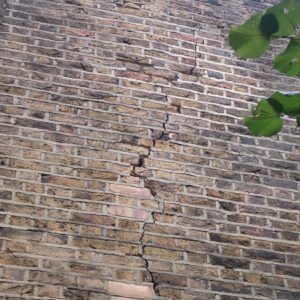
A foundation appraisal is an interpretative geotechnical assessment, typically following a ground investigation, used to determine the most appropriate foundation solution for a site. It may also involve the assessment of existing foundations at established properties, for example where subsidence, settlement, or structural cracking has been observed. 

Foundation appraisals provide the geotechnical parameters, bearing capacity values, settlement predictions, and design recommendations that structural engineers require to design safe and efficient foundations. Without a robust foundation appraisal, there is a risk of over-design (unnecessary cost) or under-design (structural failure or unacceptable settlement). 

The scope of a foundation appraisal depends on the project requirements and may include: 

  • Interpretation of ground investigation data including soil and rock descriptions, groundwater influence, in situ test results (SPTs, dynamic probing), and laboratory test results. 
  • Assessment of foundation options: strip, trench fill, pad, raft, or piled foundations, with recommendations on the most suitable type for the ground conditions and proposed loading. 
  • Bearing capacity calculations and allowable bearing pressure. 
  • Settlement analysis, including both immediate and long-term consolidation settlement predictions. 
  • Assessment of geotechnical hazards including shrinkable clay (to NHBC Standards Chapter 4.2), compressible ground, made ground, and dissolution features. 
  • Assessment of existing foundations – subsidence investigations, underpinning design, and structural adequacy. 
  • Chemical aggressivity assessment for concrete specification in accordance with BRE Special Digest 1 and BS 8500. 
  • Geotechnical reporting in accordance with BS EN 1997 (Eurocode 7) and associated UK National Annex, where applicable and subject to the investigation methods applied.  
Lustre Consulting

Why do you need a Foundation Appraisal?

Foundations are difficult to change once construction starts. Getting them wrong introduces unnecessary cost, risk, and delay.

A foundation appraisal provides early clarity on the most appropriate solution for your site. It converts ground investigation data into practical design parameters, allowing your structural engineer to design foundations that are safe, compliant, and efficient.

Without this, foundation design is often based on assumptions. This can result in over-specified foundations (increased cost) or under-designed solutions (movement, cracking, or failure).

By defining the correct approach early, you reduce the risk of redesign during construction, improve coordination across your design team, and provide confidence when dealing with building control and warranty providers.

A foundation appraisal is a small input that has a direct impact on buildability, cost certainty, and programme.

How is a Foundation Appraisal carried out?

At Lustre Consulting, we undertake foundation appraisals to interpret ground investigation data and determine the most appropriate, safe, and cost-effective foundation solution for your site. Our appraisals provide the key geotechnical parameters required to support foundation design, ensuring your development is buildable and compliant.

To meet your project requirements and align with industry standards, our appraisals are carried out in accordance with relevant British Standards (including BS EN 1997-1, BS 5930, and BS 8004), NHBC guidance where applicable, and BRE publications.

Our process involves detailed interpretation of available geotechnical data, which may include:

  • Cable percussive borehole records, including Standard Penetration Test (SPT) results and groundwater observations
  • Windowless sample boreholes and dynamic probing results for near-surface assessment
  • Trial pit logs, including inspection of existing foundations where relevant
  • Laboratory testing results to determine soil classification, strength, compressibility, and chemical aggressivity
  • Site-specific factors such as nearby trees, existing structures, level changes, and drainage proposals
  • Using this information, we assess the engineering behaviour of the ground and its suitability to support different foundation types. This typically includes:
  • Assessment of shallow foundation options such as strip, trench fill, pad, or raft foundations
  • Consideration of piled solutions where ground conditions require load transfer to deeper strata
  • Bearing capacity calculations to determine allowable foundation pressures
  • Settlement analysis, including both immediate and long-term movement
  • Assessment of geotechnical hazards such as shrinkable clay, compressible soils, made ground, or groundwater influence

Following the appraisal, we provide a clear and concise interpretative report. This typically includes:

  • Recommended foundation type and founding depth
  • Allowable bearing pressures and design parameters for structural engineers
  • Identification of geotechnical risks and any required mitigation measures
  • Commentary on compliance with NHBC or warranty provider requirements, where relevant
  • Recommendations for any additional investigation or testing, if required

Our reports focus on practical, buildable solutions that support efficient foundation design and reduce the risk of redesign during construction. By providing clarity at an early stage, we help you and your design team move forward with confidence.

When is a Foundation Appraisal Required?

A foundation appraisal is typically required where there is a need to define a safe, compliant, and buildable foundation solution based on site-specific ground conditions.

This may be necessary at various stages of a project, particularly where design certainty is required to support planning, building control, or construction.

Foundation appraisals are commonly required in the following situations:

  • Planning applications where foundation design needs to be defined or conditioned
  • Building control submissions and warranty provider approvals (e.g. NHBC, LABC)
  • Sites with variable ground conditions, made ground, or uncertain geotechnical properties
  • Developments near trees where shrinkable clay may influence foundation design
  • Basement or below-ground construction where ground and groundwater conditions are critical

By undertaking a foundation appraisal at the appropriate stage, you can ensure that foundation design is based on reliable data, reducing risk, avoiding costly redesign, and supporting a smooth transition from planning through to construction.

What is the difference between a foundation appraisal and a ground investigation?

A ground investigation is the physical process of drilling, excavating, sampling, and testing the soil and rock beneath a site.  

A foundation appraisal is the subsequent analysis and interpretation of that data to determine what type of foundations are appropriate, what the design parameters are, and whether any geotechnical hazards need to be addressed. We typically provide both as a combined service. 


Do I need a foundation appraisal for a domestic extension?

It depends on the scale of the extension and the ground conditions. For simple extensions on straightforward ground, building control may be satisfied with a standard foundation design.  

However, if there are trees nearby, clay soils anticipated, sloping ground, or known subsidence issues, a foundation appraisal will help ensure the foundations are correctly designed and avoid problems during construction or afterwards. 

Can you assess the foundations of an existing building?

Yes. We can undertake foundation assessments for existing properties where there are concerns about subsidence, settlement, or structural cracking.  

This may involve trial pit excavation to expose and inspect the existing foundations, combined with soil testing to determine whether ground movement is likely to continue. Our reports provide recommendations on whether remedial measures such as underpinning may be required. 

What standards do your reports comply with?

Our foundation appraisal reports are prepared in accordance with BS EN 1997 (Eurocode 7) and the associated UK National Annex, as well as relevant British Standards including BS 5930 (Code of Practice for Ground Investigations) and BS 8004 (Code of Practice for Foundations), where possible and subject to site-specific factors and constraints on investigation and testing methods. 

In practice, the extent to which a full Eurocode-compliant approach can be applied depends on the nature and scale of the investigation and the quality of the data that can reasonably be obtained. Constraints may include restricted site access (for example at occupied residential properties or operational sites), limitations on the depth or method of investigation due to below-ground obstructions or services, the recovery of disturbed rather than undisturbed samples in certain ground conditions, or cases where only limited in situ testing data is available. Where a prescribed pile is proposed and only windowless sample boreholes or trial pits are feasible, for example, the range of geotechnical parameters that can be reliably derived may be more limited than where cable percussive boreholes with Standard Penetration Testing are achievable. In such circumstances, our reports clearly set out the limitations of the available data, identify any assumptions made, and recommend further investigation where this is considered necessary to support the detailed foundation design. 

Where relevant, we also reference NHBC Standards Chapter 4.2 for building near trees on shrinkable clay soils, which sets out the minimum foundation depth requirements based on tree species, mature height, and the plasticity of the clay subsoil. For sites where infiltration-based drainage is proposed, our appraisals are informed by soakage testing to BRE Digest 365 and seasonal groundwater monitoring data, ensuring that the foundation and drainage design are considered together. Chemical aggressivity of the soil and groundwater is assessed in accordance with BRE Special Digest 1 and BS 8500 to inform the appropriate concrete specification, including Design Sulphate Class and Aggressive Chemical Environment for Concrete (ACEC) classification. 

Sites Successfully Approved and Built

Lustre Consulting was appointed by Equans to undertake a Phase 2 Geotechnical Investigation and provide a Remediation Verification Report for the redevelopment of a site located on Sansom Road in Leytonstone, East London. The project involved the construction of a six-storey residential apartment building, including communal landscaped areas, on a site with significant geoenvironmental challenges […]

Lustre Consulting was appointed by Equans to undertake a Phase...

Lustre Consulting was instructed by Fernham Homes to undertake a contaminated land assessment, consisting of a Phase 1 Desk Study and Phase 2 Site Investigation, for the proposed redevelopment of Orwell Spike, located in West Malling, Kent. The site, previously used as agricultural land, presented a range of geo-environmental and geotechnical challenges that required careful […]

Lustre Consulting was instructed by Fernham Homes to undertake...

A Geotechnical Site Investigation was required by the London Borough of Southwark to confirm ground conditions at 12 residential terraced properties. These occupied residential dwellings belonged to local authority housing and were all experiencing various levels of wall cracking. The geotechnical investigations were required to confirm the nature and properties of the underlying substrata, including […]

A Geotechnical Site Investigation was required by the London...

Lustre Consulting was appointed by Corporation Street Hotel Ltd to provide a comprehensive contaminated land and geotechnical assessment for the redevelopment and regeneration of a site along Corporation Street in Rochester, Kent. Formerly a petrol station and currently operating as a car wash, the site had several unique environmental challenges and constraints. Leftover infrastructure from […]

Lustre Consulting was appointed by Corporation Street Hotel Ltd...

Start your Foundation Appraisal today