Tick Icon Gain Valuable Insights
Tick Icon Technically Robust
Tick Icon Regulator Appoval

The Cost of Unforeseen Drainage Problems

Our Drainage Strategy will help you understand your site’s constraints, clarify your options, and present an actionable, compliant design solution that satisfies regulators and supports planning approval.

Drainage Consultants Committed to Getting Your Site Approved and Built

Your specialist Drainage Consultant is part of a dedicated team of Chartered professionals who have been successfully gaining regulatory approval for clients all over the UK, ensuring that their sites are safe and compliant places to live and work.

Our Drainage Strategies are expertly prepared by experienced consultants who are committed to providing you with a technically robust report that is tailored to meet your plans for the site.

  • Tick Icon Reduce your risk, by gaining valuable insights
  • Tick Icon Technically robust report, written with the Drainage Authority in mind
  • Tick Icon Tailored solution, actionable report to support design

Meet Your Drainage Consultant

Drainage Strategy

Our Consultants can review your site and guide you through the entire Drainage Strategy process from early concept design to regulator submission so you can get your site approved and built.

They are ready to get started.

What is a Drainage Strategy?

A Drainage Strategy (or Surface Water Drainage Strategy) sets out the overall approach for managing rainfall and surface water runoff from a proposed development. It demonstrates how your site will control discharge sustainably and in accordance with planning policy.

Most planning authorities and Lead Local Flood Authorities (LLFAs) require a Drainage Strategy to support planning applications. The strategy identifies appropriate discharge routes, storage volumes, and Sustainable Drainage System (SuDS) principles to prevent flooding and protect water quality.

At Lustre Consulting, we prepare drainage strategies that integrate SuDS design concepts, infiltration testing to BRE365, and runoff calculations that meet CIRIA C753, NPPF, and local drainage policy standards.

Our strategies provide the evidence and clarity needed to discharge conditions, satisfy LLFA queries, and guide your project through the next design phase.

For detailed SuDS design and hydraulic modelling, see our SuDS Design page.

Lustre Consulting

Get Your Drainage Strategy

1

Get Proposal

Send us your site plans and drainage requirements, we’ll provide a clear, fixed proposal outlining scope, cost, and delivery time

2

Drainage Strategy

We work through the complex process of evaluating and assessing the site’s capability and capacity to drain.

3

Receive Report

Written with the Lead Local Flood Authority in mind, tailored for you so you know what action to take for design purposes.

Why Do I Need a Drainage Strategy?

A Drainage Strategy (including Sustainable Drainage Systems or SuDS design) is required to show how surface water from a new development will be managed both safely and sustainably. By addressing drainage early, you reduce risk and stress, and gain the confidence that your planning application is supported by a robust and regulator-ready scheme.

Drainage Strategies are usually required to:

When is a Drainage / SuDS Strategy mandatory?

LLFAs are statutory consultees for major development, and will require a drainage / SuDS strategy where proposals involve:

  • Development of sites 1 hectare or greater

  • All major planning applications (10 dwellings or more, or equivalent non-residential floorspace)

In addition, drainage strategies are often requested for smaller sites where surface water, groundwater, or local flood risk has been identified.

By preparing the drainage strategy at an early stage, we ensure your SuDS design is fully integrated with the wider development proposals and compliant with local and national planning requirements. This provides you with clear, regulator-approved measures that complement your scheme.

How We Prepare a Drainage Strategy

At Lustre Consulting, we prepare Drainage Strategies and SuDS designs that are tailored to the scale and complexity of your development. Our assessments support planning applications for residential, commercial and mixed-use schemes, from single plots to large catchment-scale developments.

Our multidisciplinary team adds value by combining drainage design with our in-house capability in infiltration testing (BRE365), groundwater monitoring, geotechnical investigations and contaminated land assessment. This integrated approach saves time and cost, while ensuring all aspects of surface water management are considered together.

Our Drainage Services Include:

  • Site review to identify flood risk, drainage constraints and development potential

  • Proof-of-concept SuDS assessments and opportunity mapping

  • Drainage strategies for planning applications (surface water and foul water)

  • Flood Risk Assessments (where combined reports are required)

  • Masterplanning and site development support

  • Hydraulic modelling (1D and 2D)

  • Detailed drainage and SuDS design for submission and construction

  • Soakage and permeability testing to BRE365 standards

All of our drainage work is delivered in line with the National Planning Policy Framework (NPPF) and the requirements of Lead Local Flood Authorities (LLFAs), ensuring your application is regulator-ready and compliant.

When is a Drainage Strategy required?

A Drainage Strategy is normally required for major planning applications (10 dwellings or more, or equivalent non-residential floorspace) and for all sites of 1 hectare or greater. In practice, local planning authorities or Lead Local Flood Authorities (LLFAs) may also request one for smaller sites if there is a history of flooding or known surface water issues.

Do all developments need SuDS?

Most planning authorities now expect Sustainable Drainage Systems (SuDS) to be incorporated into new development. Even where a site is not formally required to submit a SuDS strategy, demonstrating how runoff will be managed sustainably helps reduce regulator objections and supports a smoother planning process.

What does a Drainage Strategy include?

A comprehensive Drainage Strategy will typically set out:

  • How surface water runoff will be managed, attenuated or stored

  • Opportunities for SuDS features such as permeable paving, swales or attenuation basins

  • Drainage layout drawings and hydraulic calculations

  • Discharge rates and points of connection

  • Maintenance responsibilities over the lifetime of the development

  • Supporting evidence such as infiltration testing to BRE365 and groundwater monitoring

Can I combine a Drainage Strategy with a Flood Risk Assessment?

Yes. In many cases it is more efficient to prepare the FRA and Drainage Strategy together. This ensures consistency across both documents and avoids conflicting recommendations. We often deliver combined FRA and drainage/SuDS packages for planning submissions.

Is infiltration testing always required?

Not always. Infiltration (soakage) testing to BRE365 is required where infiltration-based SuDS (such as soakaways or permeable paving) are proposed. On some sites, the LLFA may require test evidence even if infiltration is not viable, to demonstrate why alternative drainage methods have been selected.

Sites Successfully Approved and Built

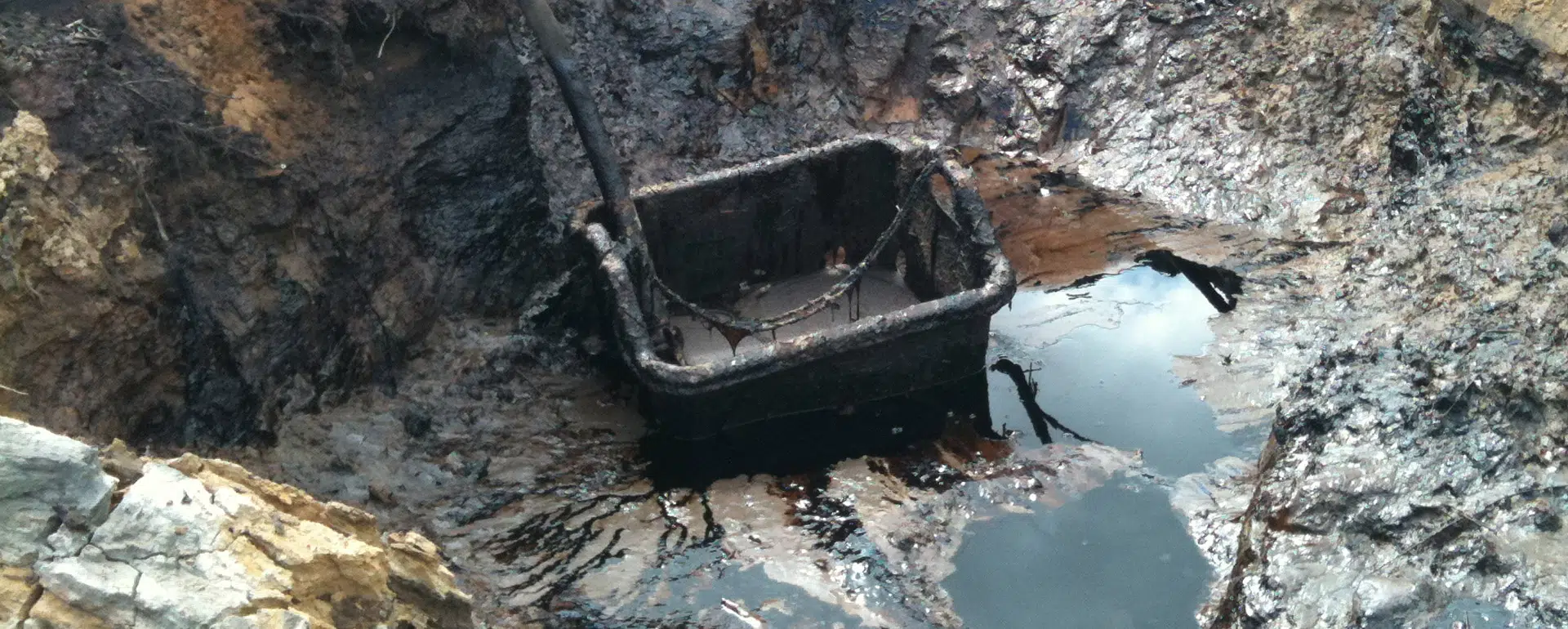
An equipment testing facility required environmental services to support an application for an Environmental Permit for the discharge of cooling water from their test facility building into a nearby river. Following the completion of a Conservation Risk Assessment, it was determined that a Bespoke Environmental Permit Application would need to be submitted as the river […]

An equipment testing facility required environmental services...

This site was granted planning permission by the Secretary of State for the development of 350 100% affordable low rise houses and apartments. The site comprises approximately 24ha of open space, bisected by a former sand pit and pond. Site investigations undertaken since the 1990s found the pond (1ha in area and up to 4m […]

This site was granted planning permission by the Secretary of...

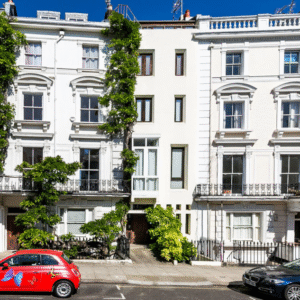
Lustre Consulting was appointed by Schneider Designers to conduct a detailed Basement Impact Assessment (BIA) and Flood Risk Assessment (FRA) for a proposed residential development in Notting Hill. The project involved the extension of a basement beneath an existing property within the Royal Borough of Kensington and Chelsea. Our service aimed to address concerns related […]

Lustre Consulting was appointed by Schneider Designers to...

Lustre Consulting was commissioned to undertake a suite of environmental assessments to support the redevelopment of a site at Albion Road, Dartford. This project involved refurbishing an existing building and constructing two new warehouse structures, creating a sustainable and compliant commercial development. The site, previously a depot and infilled land reclaimed from marshland, required a […]

Lustre Consulting was commissioned to undertake a suite of...

Start your Drainage Strategy today